


Some error occured while loading the Quick View. Please close the Quick View and try reloading the page.
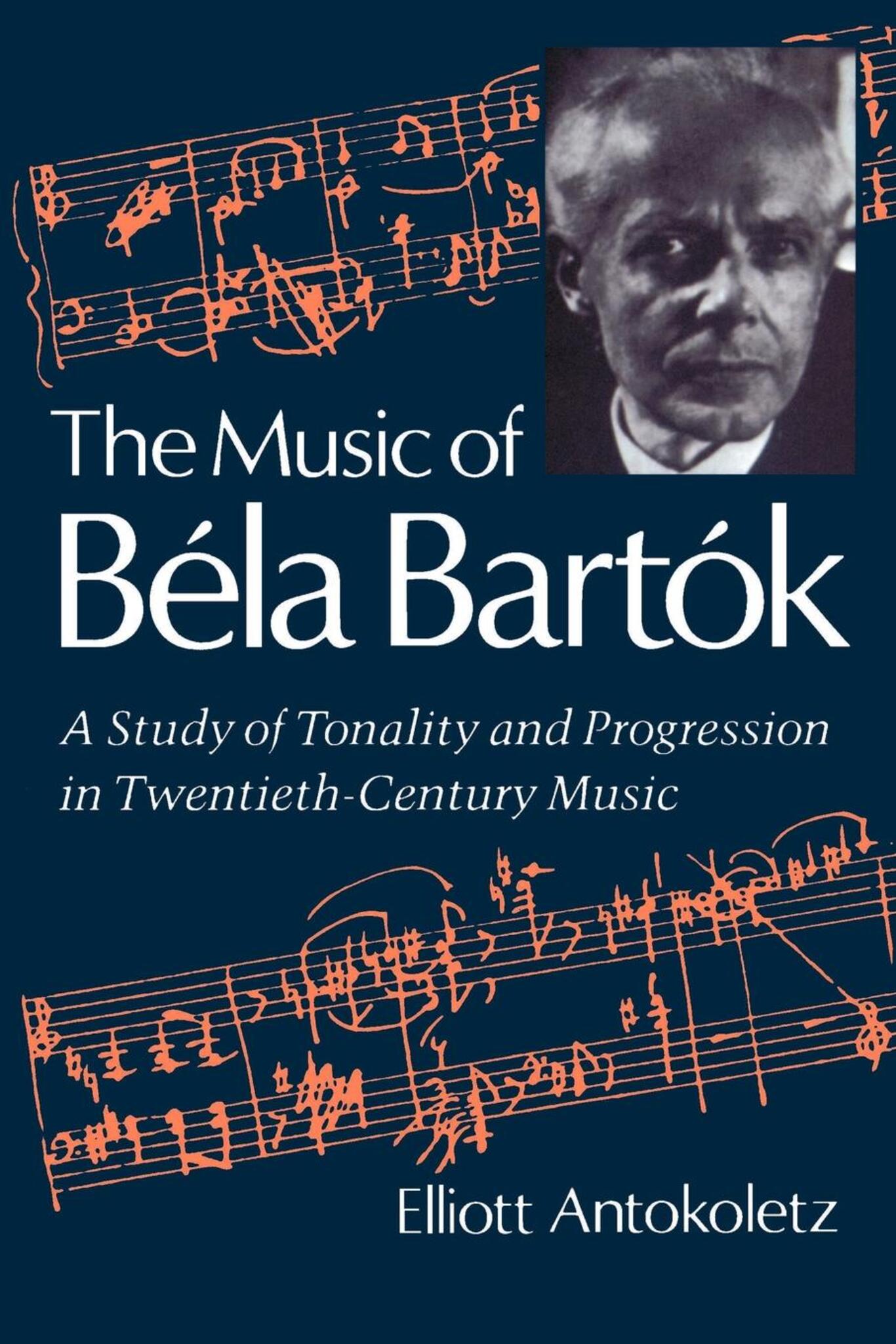
The basic principles of progression and the means by which tonality is established in Bartók's music remain problematical to many theorists. Elliott Antokoletz here demonstrates that the remarkable continuity of style in Bartók's evolution is founded upon an all-encompassing system of pitch relations in which one can draw together the diverse pitch formations in his music under one unified set of principles.

Price: $33.95
Pages: 472
Publisher: University of California Press
Imprint: University of California Press
Publication Date:
11 January 1990
Trim Size: 9.00 X 6.00 in
ISBN: 9780520067479
Format: Paperback
BISACs:
Elliott Antokoletz is Professor of Musicology at the University of Texas, Austin. In 1981 he received the Béla Bartók Memorial Plaque and Diploma from the Hungarian government.
List of Illustrations
Preface
Acknowledgments
I The Musical Language of Bartok: Historical Backgrounds
Folk- and Art-Music Sources
Orientation toward French, Russian, and Folk-Music Sources:
Nonfunctional Bases in Pentatonic, Modal, and Whole-Tone
Constructions
Use of Symmetrical Pitch Collections by Russian, French,
and Hungarian Composers
Russian Nationalists:
Symmetrical Properties of the Dominant-Ninth Chord
Russian Nationalists, Debussy, and Stravinsky:
Symmetrical Properties of Nontraditional as Well as Traditional
(Pentatonic and Modal) Pitch Constructions
Russian Nationalists, Scriabin, and Kodaly:
Symmetrical Partitions of the Octatonic Scale
Late Nineteenth- and Early Twentieth-Century Germanic Influences:
Symmetrical Organization of Chromatically Related Keys
The Schoenberg School:
Symmetrical Formations as the Basis of Progression
in Free-Atonal Compositions
Berg and Webern:
Total Systematization of the Concepts of the Interval Cycle and
Inversional Symmetry in Dodecaphonic Serial Compositions
II Harmonization of Authentic Folk Tunes
III Symmetrical Transformations of the Folk Modes
IV Basic Principles of Symmetrical Pitch Construction
V Construction, Development, and Interaction of lntervallic Cells
VI Tonal Centricity Based on Axes of Symmetry
Including the Concepts of:
Symmetrical Organization around an Axis; Use of Symmetrical
Cells in Establishing Axes; Interaction of Traditional Tonal Centers
and Axes
VII Interaction of Diatonic, Octatonic, and Whole-Tone Formations
VIII Generation of the Interval Cycles
IX Conclusion
Chronological List of Cited Bartok Compositions
Works Cited
Index to Basic Terms, Definitions, and Concepts
Index to Compositions
General Index
Preface
Acknowledgments
I The Musical Language of Bartok: Historical Backgrounds
Folk- and Art-Music Sources
Orientation toward French, Russian, and Folk-Music Sources:
Nonfunctional Bases in Pentatonic, Modal, and Whole-Tone
Constructions
Use of Symmetrical Pitch Collections by Russian, French,
and Hungarian Composers
Russian Nationalists:
Symmetrical Properties of the Dominant-Ninth Chord
Russian Nationalists, Debussy, and Stravinsky:
Symmetrical Properties of Nontraditional as Well as Traditional
(Pentatonic and Modal) Pitch Constructions
Russian Nationalists, Scriabin, and Kodaly:
Symmetrical Partitions of the Octatonic Scale
Late Nineteenth- and Early Twentieth-Century Germanic Influences:
Symmetrical Organization of Chromatically Related Keys
The Schoenberg School:
Symmetrical Formations as the Basis of Progression
in Free-Atonal Compositions
Berg and Webern:
Total Systematization of the Concepts of the Interval Cycle and
Inversional Symmetry in Dodecaphonic Serial Compositions
II Harmonization of Authentic Folk Tunes
III Symmetrical Transformations of the Folk Modes
IV Basic Principles of Symmetrical Pitch Construction
V Construction, Development, and Interaction of lntervallic Cells
VI Tonal Centricity Based on Axes of Symmetry
Including the Concepts of:
Symmetrical Organization around an Axis; Use of Symmetrical
Cells in Establishing Axes; Interaction of Traditional Tonal Centers
and Axes
VII Interaction of Diatonic, Octatonic, and Whole-Tone Formations
VIII Generation of the Interval Cycles
IX Conclusion
Chronological List of Cited Bartok Compositions
Works Cited
Index to Basic Terms, Definitions, and Concepts
Index to Compositions
General Index